Reels tagged #space

KnowledgeReels
Swipe up
Space

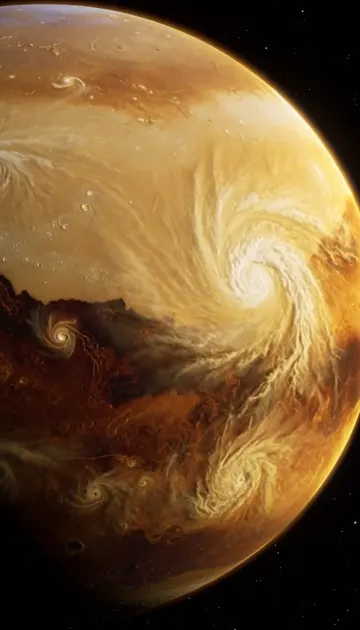
A day on Venus is longer than its year

Venus takes 243 Earth days to spin once, but only 225 to orbit the Sun — so a single Venusian day outlasts its year.

Space

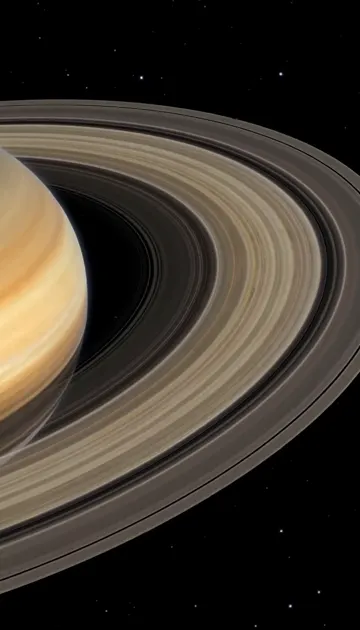
Saturn would float in water

Saturn is mostly hydrogen and helium, giving it a density lower than water. Find a bathtub big enough and the ringed planet would bob on the surface.

History

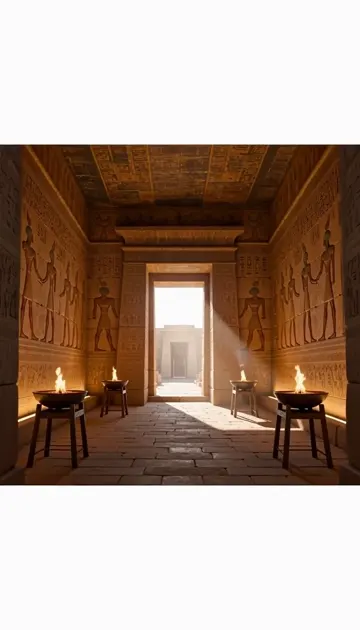
Cleopatra lived closer to the Moon landing than to the pyramids

The Great Pyramid was already 2,500 years old in Cleopatra's lifetime. She lived only about 2,000 years before Apollo 11.
Animals

Tardigrades can survive the vacuum of space

These half-millimetre "water bears" dry into a tun state and shrug off radiation, boiling heat and near absolute zero — and have been revived after a space trip.

Space

The Moon drifts 3.8 cm away every year

Tidal friction slowly pushes the Moon outward and lengthens our days. In the age of dinosaurs a day lasted about 23 hours.

Space

The first photo of a black hole used an Earth-sized telescope

In 2019 eight radio observatories across the planet were linked into one virtual dish the width of Earth. It imaged M87*, a black hole 55 million light years away.

Firsts

The first human in space orbited in 108 minutes

Yuri Gagarin launched on 12 April 1961 and circled the whole planet in 108 minutes. He ejected and parachuted down separately from his capsule.

Space

Time itself slows down near a black hole

Gravity stretches time. Watch someone fall toward the event horizon and they appear to slow, redden and freeze forever — while for them, the fall takes only moments.

Space

Black holes slowly evaporate

Stephen Hawking showed black holes leak faint radiation and shrink. A stellar-mass one would take about 10^67 years to vanish — far longer than the universe has existed.

Firsts

The first Moon footprints may last millions of years

Neil Armstrong stepped onto the Moon on 20 July 1969. With no wind or rain, those bootprints in the dry lunar dust can survive for millions of years.

Firsts

The first animal to orbit Earth was a stray dog

Laika launched aboard Sputnik 2 in November 1957. The Moscow street dog proved a living body could survive launch and weightlessness.

Technology

GPS would fail without Einstein

Satellite clocks tick faster in weaker gravity and slower from speed. Without relativity corrections of about 38 microseconds a day, positions would drift kilometres off.

Inventions

Galileo's telescope ended an ancient certainty

In 1609 Galileo turned a new Dutch spyglass to the sky and saw four moons orbiting Jupiter, proof that not everything circles the Earth.

Sports

Someone played golf on the Moon

In 1971 Alan Shepard swung one-handed in a stiff spacesuit during Apollo 14. In one-sixth gravity with no air, the ball sailed far beyond any earthly drive.

7 Wonders

You cannot see the Great Wall from space

Despite the popular claim, astronauts report the wall is too narrow and blends with surrounding terrain. Chinese astronaut Yang Liwei confirmed he could not spot it from orbit.