Reels tagged #inventions
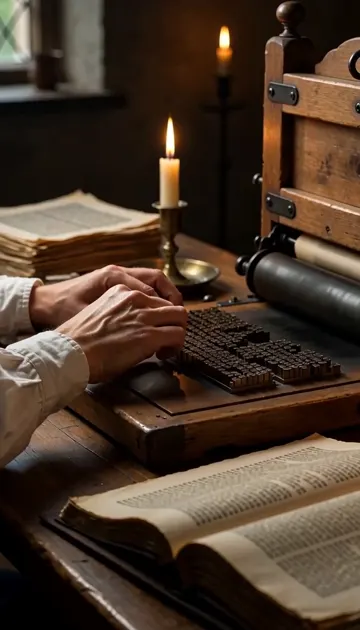
Gutenberg's press made books 300 times faster
Before 1440 a scribe needed months to copy one book by hand. Gutenberg's movable-type press could print hundreds of pages a day, and Europe went from a few thousand books to millions within 50 years.
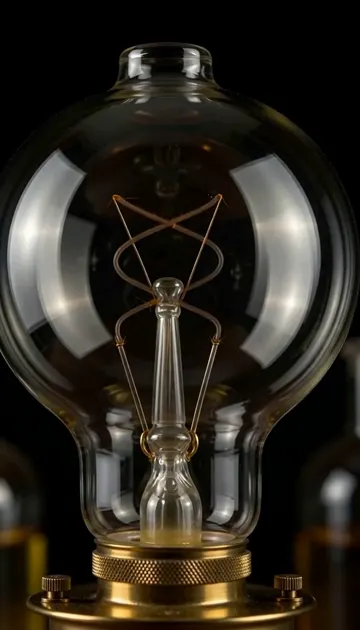
Edison tested over 6,000 materials for one filament
The bulb wasn't a single flash of genius. Edison's team tried thousands of substances, including bamboo, before finding a carbon filament that glowed for more than 1,200 hours.
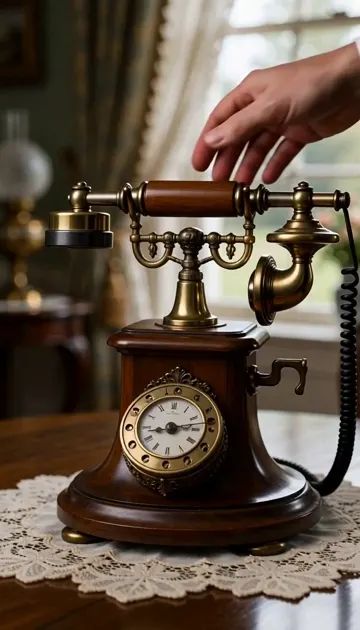
The telephone patent was filed hours before a rival's
Alexander Graham Bell filed his telephone patent on 14 February 1876, only hours before Elisha Gray filed a caveat for a very similar device. Those few hours shaped the entire telecom industry.
Penicillin was found on a dish left by mistake
Alexander Fleming returned from holiday in 1928 to a contaminated culture plate. The mould killing the bacteria around it became the first true antibiotic and has saved an estimated 200 million lives.
X-rays were discovered by an accidental glow
In 1895 Rontgen noticed a screen glowing across his darkened lab while working with a covered tube. Weeks later he imaged his wife's hand, and medicine could see inside a living body for the first time.
A cloth merchant discovered the microbial world
Antonie van Leeuwenhoek ground his own tiny lenses to inspect fabric, then pointed them at pond water in the 1670s and became the first human to see bacteria, which he called animalcules.
Galileo's telescope ended an ancient certainty
In 1609 Galileo turned a new Dutch spyglass to the sky and saw four moons orbiting Jupiter, proof that not everything circles the Earth.
A separate condenser doubled the steam age
Newcomen's engine wasted heat reheating its cylinder every stroke. James Watt's separate condenser cut fuel use by about 75 percent and made steam power practical everywhere.
The wheel was invented for pottery, not transport
The oldest known wheels, from about 3500 BC in Mesopotamia, were potter's wheels. It took roughly another 300 years before anyone mounted one on an axle to move a cart.
Paper was a state secret for 600 years
Cai Lun refined papermaking in China around 105 AD. The method stayed inside Asia until captured papermakers reportedly revealed it in Samarkand in 751 AD.
The compass began as a fortune-telling tool
Han dynasty Chinese used lodestone spoons for divination and geomancy centuries before anyone thought to steer a ship by one, around the 11th century.
Gunpowder was invented while hunting for immortality
Chinese alchemists mixing saltpetre, sulphur and charcoal were trying to brew an elixir of eternal life. They got explosives instead.
Mechanical clocks had no minute hand at first
Early European clocks from the 1300s showed only hours, and many had no dial at all, just a bell. The minute hand arrived only after the pendulum made clocks accurate enough to need one.
Radio's first broadcasts crossed an ocean in dots
Marconi sent the letter S across the Atlantic by wireless in 1901, a distance many physicists insisted was impossible because radio waves should travel in straight lines.
Television's inventor banned his kids from watching it
Philo Farnsworth built the first fully electronic TV at 21, inspired by ploughed field rows. He later told his son there was nothing worthwhile on it.
The transistor is the most manufactured object ever
Invented at Bell Labs in 1947, transistors now number in the sextillions. More are produced each second than all the grains of rice eaten worldwide in a year.
Two people invented the microchip months apart
Jack Kilby demonstrated an integrated circuit in 1958 and Robert Noyce independently designed a better silicon version in 1959. Both are credited with the invention.
The laser was called a solution looking for a problem
When Theodore Maiman fired the first ruby laser in 1960, nobody knew what it was for. Today lasers cut steel, scan barcodes and carry the internet.
The first internet message crashed after two letters
In 1969 a UCLA team tried to send LOGIN to Stanford over ARPANET. The system crashed after LO, making the internet's first word an accidental lo.
A melted chocolate bar led to the microwave oven
Engineer Percy Spencer noticed a bar melting in his pocket near a radar magnetron in 1945. He tried popcorn next, and the microwave oven was born.
Velcro was copied from burrs stuck to a dog
After a walk in 1941 George de Mestral studied the burrs clinging to his dog's fur under a microscope and saw tiny hooks. It took him eight years to reproduce them in nylon.
The Post-it note started as a failed superglue
3M chemist Spencer Silver made an adhesive that was too weak. Years later a colleague used it to keep bookmarks in his hymn book, and a billion-dollar product appeared.
The wearable pacemaker was invented after a blackout
When a power cut killed a hospitalised child on a plug-in pacemaker in 1957, Earl Bakken built a battery-powered wearable version in four weeks.
The MRI scanner grew out of a chemistry tool
Nuclear magnetic resonance was used to analyse molecules until researchers realised it could map water in human tissue, giving detailed images with no radiation at all.
Surgery before anaesthesia was timed in seconds
Surgeons competed to amputate a leg in under a minute because patients were awake. Ether anaesthesia, demonstrated publicly in 1846, changed surgery forever.
Refrigeration killed a global ice-shipping industry
In the 1800s ships carried blocks of frozen lake ice from New England to India. Mechanical refrigeration wiped out the trade within a few decades.
Air conditioning was invented to fix smudged ink
Willis Carrier built the first modern AC in 1902 for a printing plant where humidity was misaligning colours. Cooling people was a side effect.
The safety brake, not the elevator, built skyscrapers
Lifts existed for centuries, but nobody trusted them. Elisha Otis's 1853 safety brake stopped a cut cable from dropping the car, and cities began growing upward.
The zipper took 30 years to catch on
Patented in the 1890s and refined in 1913, the zipper only became common after the 1930s, when it was marketed on children's clothes as a way to teach self-reliance.
The ballpoint pen was designed by a newspaper editor
Laszlo Biro noticed newsprint ink dried instantly and paired thick ink with a rotating ball in the 1930s, ending the age of leaky fountain pens.
The first barcode ever scanned was on chewing gum
Barcode patterns were inspired by Morse code drawn in the sand. The first commercial scan, in 1974, was a 10-pack of Wrigley's gum.
The credit card was invented after a forgotten wallet
Frank McNamara left his wallet at a New York dinner in 1949 and returned with the Diners Club card, the first multi-merchant charge card.
The ATM was inspired by chocolate vending machines
John Shepherd-Barron thought if a machine could dispense chocolate, it could dispense cash. The first ATM opened in London in 1967 and used radioactive-ink cheques.
An airbag inflates in about 30 milliseconds
That is faster than a blink. The bag fires, fills with nitrogen gas and starts deflating again before your head reaches it.
Volvo gave the three-point seatbelt away for free
Nils Bohlin's 1959 design was patented, then released to every carmaker at no cost because Volvo judged it too important to keep. It has saved over a million lives.
Traffic lights existed before cars did
London installed a gas-lit signal for horse traffic in 1868. It exploded weeks later, injuring the policeman operating it.
The first bicycle had no pedals
The 1817 draisine was pushed along by the rider's feet. Pedals arrived decades later, and the chain drive only in the 1880s.
Diesel's first engines ran on peanut oil
Rudolf Diesel demonstrated his engine on vegetable oil in 1900, envisioning farmers fuelling their own machinery long before biodiesel existed.
Two enemies invented the jet engine separately
Frank Whittle in Britain and Hans von Ohain in Germany developed jet engines independently in the 1930s, with neither aware of the other's work.
Helicopter designs are 500 years old
Leonardo da Vinci sketched an aerial screw around 1489. A workable helicopter took until the 1930s, because no engine before then had enough power for its weight.
The parachute predates the aeroplane by a century
Andre-Jacques Garnerin jumped from a balloon at 3,000 feet over Paris in 1797, more than 100 years before powered flight.
A submarine attacked a warship in 1776
The Turtle, a one-man wooden sub cranked by hand, tried to attach a bomb to a British ship in New York Harbour during the American Revolution.
The first battery was stacks of coins and brine
Volta's 1800 pile of copper and zinc discs separated by salt-soaked cloth gave the world its first steady electric current and made electrical science possible.
Faraday's first motor fit in a glass of mercury
In 1821 Michael Faraday made a wire rotate continuously around a magnet in a mercury bath. Nearly all electric motors today descend from that desktop experiment.
Alternating current won because it travels cheaply
AC can be stepped up to high voltage and sent hundreds of kilometres with small losses. Direct current needed a power station every few kilometres.
The first practical solar cell was 6 percent efficient
Bell Labs unveiled it in 1954 and it was so expensive that only satellites could justify it. Modern panels exceed 22 percent at a tiny fraction of the cost.
Bakelite was the first fully synthetic plastic
Created in 1907, it contained no molecules found in nature. It resisted heat and electricity, and it launched the age of plastics.
Vulcanised rubber came from a dropped sample
Charles Goodyear accidentally let a rubber and sulphur mixture hit a hot stove in 1839. Instead of melting it toughened, making tyres possible.
Early matches were dangerous to make and use
The first friction matches from 1826 ignited unpredictably, and white phosphorus versions poisoned factory workers. Safety matches split the chemicals between head and striking strip.
Canned food arrived 50 years before the can opener
Napoleon's prize for preserving army rations produced sealed tins in 1810. For decades soldiers opened them with a hammer and chisel or a bayonet.
Pasteurisation was invented to save wine
Louis Pasteur was asked to stop French wine spoiling. Gently heating it killed the microbes, and the same trick later made milk safe worldwide.
The sewing machine sparked a riot
In 1830 Barthelemy Thimonnier's Paris workshop was destroyed by tailors who feared his machines would take their jobs.
The telegraph shrank a message from weeks to minutes
Before 1844 news crossed continents at the speed of a horse or ship. Morse's telegraph made distance almost irrelevant for information.
Braille was adapted from a military night code
Napoleon's army used raised-dot night writing so soldiers could read in the dark. Fifteen-year-old Louis Braille simplified it into the system used today.
QWERTY was designed around mechanical jams
Keys were spread out so common letter pairs would not clash on early typewriters. The layout outlived the machines it was made for.
3D printing is nearly 40 years old
Chuck Hull patented stereolithography in 1986. Layer-by-layer printing now makes jet parts, houses and human tissue scaffolds.
The escalator began as an amusement ride
Coney Island's 1896 inclined elevator was a novelty attraction. Only later did shops realise it could move customers between floors.
Spectacles were invented around 1286 in Italy
Glass lenses were held together by a rivet and balanced on the nose. Ear arms did not appear for another 450 years.
Roman concrete gets stronger in seawater
Seawater reacts with volcanic ash in the mix to grow interlocking crystals, which is why 2,000-year-old Roman harbours still stand while modern concrete crumbles.
The washing machine gave back a full working day
Hand laundry took most of a day each week. Electric washers, common from the 1920s, are ranked by economists among the most liberating machines ever built.