Reels tagged #indianmythology
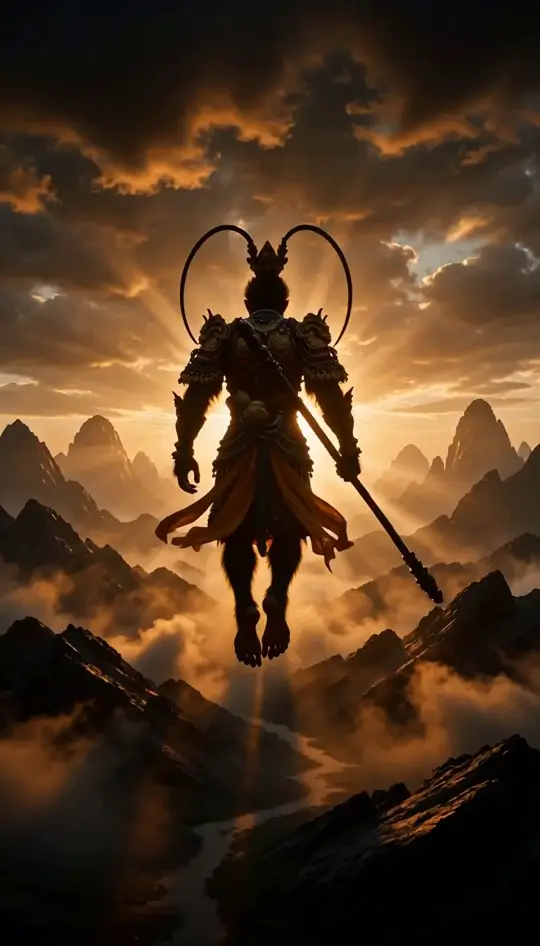
Hanuman tried to eat the Sun
As an infant, Hanuman mistook the rising sun for a ripe mango and leapt into the sky to swallow it. Indra struck him down with a thunderbolt, injuring his jaw — the name Hanuman means "disfigured jaw".
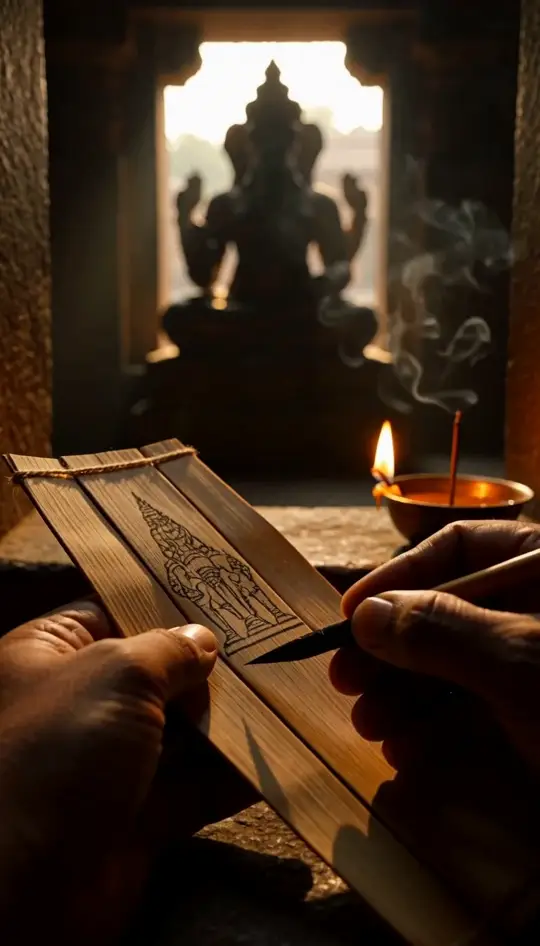
Ganesha wrote with his own tusk
When Vyasa dictated the Mahabharata, Ganesha agreed to scribe it only if the telling never paused. Mid-epic his pen broke, so he snapped off his own tusk and kept writing.
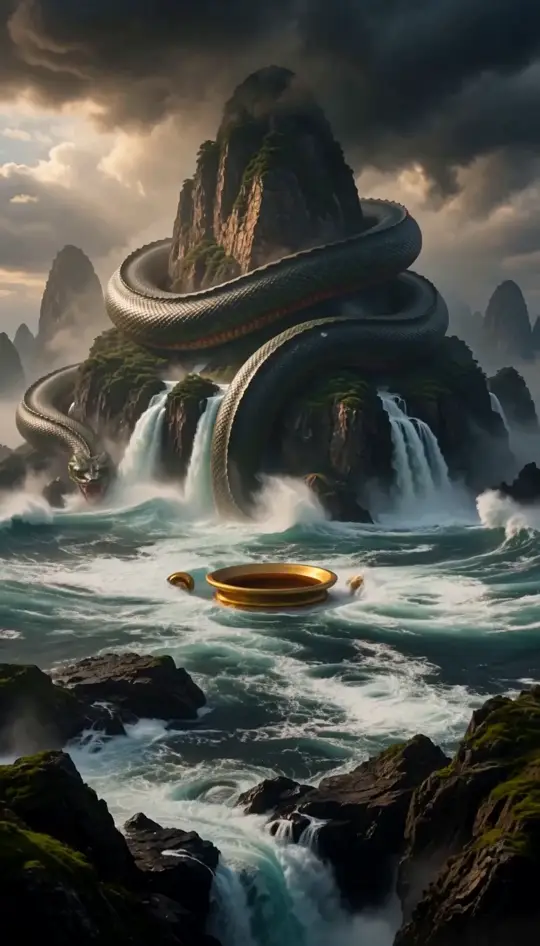
Gods and demons churned an ocean together
In the Samudra Manthan, devas and asuras used Mount Mandara as a churning rod and the serpent Vasuki as the rope to pull nectar of immortality from the ocean of milk. Poison surfaced first — Shiva drank it.
Arjuna saw only the eye of the fish
Asked what he could see, every prince described the tree, the sky, the crowd. Arjuna said he saw nothing but the eye of the revolving fish — and that focus won him Draupadi's hand.
Karna was born wearing armour
Karna came into the world with kavach and kundal — divine armour and earrings fused to his body that made him invincible. Indra begged them away as charity, and Karna cut them off rather than refuse a request.
Bhishma chose the hour of his own death
Granted the boon of dying only when he willed it, Bhishma lay on a bed of arrows for 58 days after falling in battle, waiting for the sun to turn north before letting go.
Ravana was a scholar, not just a villain
The ten-headed king of Lanka was a master of the Vedas, an astrologer and a virtuoso of the veena. His ten heads are often read as the six shastras and four Vedas he had mastered.
Garuda stole immortality and gave it up
To free his enslaved mother, Garuda flew to the heavens and seized the pot of amrita from the gods — then handed it back without drinking a drop, earning Vishnu's friendship instead.
Shiva's dance destroys and creates
As Nataraja, Shiva dances the Tandava inside a ring of fire: the drum in one hand beats out creation, the flame in another consumes the universe, and his raised foot promises release.
The Ganga fell into Shiva's hair
The river's descent from heaven would have shattered the earth, so Shiva caught her in his matted locks and released her gently — which is why the Ganga is said to flow from his head.
Krishna held up a mountain for seven days
When Indra flooded Vrindavan in rage, the young Krishna lifted Govardhan hill on his little finger and sheltered the entire village and its cattle beneath it until the storm broke.
Narasimha was a loophole in a boon
Hiranyakashipu could not be killed by man or beast, indoors or out, by day or night. So Vishnu came as a lion-man, at dusk, on a threshold, and laid him across his lap.
Draupadi's sari never ended
Dragged into the Kuru court to be disrobed, Draupadi called on Krishna — and the fabric renewed itself endlessly until Dushasana collapsed from exhaustion. Her vow that day set the war in motion.
Eklavya taught himself with a clay teacher
Refused as a student, the tribal boy built a statue of Drona and practised before it until he outshot the princes. Drona then asked for his right thumb as fee — and Eklavya cut it off.
Kumbhakarna slept six months at a time
Meaning to ask Brahma for indrasana, a throne, the giant's tongue slipped and he asked for nidrasana — sleep. Waking him took drums, elephants and armies walking over his body.
A vulture fought Ravana alone
Jatayu, the ageing bird-king, attacked Ravana's flying chariot to stop Sita's abduction. His wings were cut away, but he lived long enough to tell Rama which way south the demon had flown.
Abhimanyu learned war in the womb
He overheard Krishna explain how to break into the chakravyuha while still unborn — but his mother fell asleep before the escape was described, and at sixteen he died inside the formation.
Parashurama made the sea retreat
The axe-wielding sage is said to have flung his weapon into the Arabian Sea, and the waters drew back to create the coastal strip of Konkan and Kerala — land raised from the ocean floor.
One avatar has not arrived yet
Kalki, the tenth avatar of Vishnu, is prophesied to appear at the end of Kali Yuga on a white horse with a blazing sword, ending the age and turning the wheel of time back to gold.
Sita was found in a furrow
King Janaka ploughed a field for a ritual and turned up an infant in the soil. Her name means "furrow", and at the end of the Ramayana she asks the earth to take her back — and it does.