Reels tagged #firsts

KnowledgeReels
Swipe up
Firsts

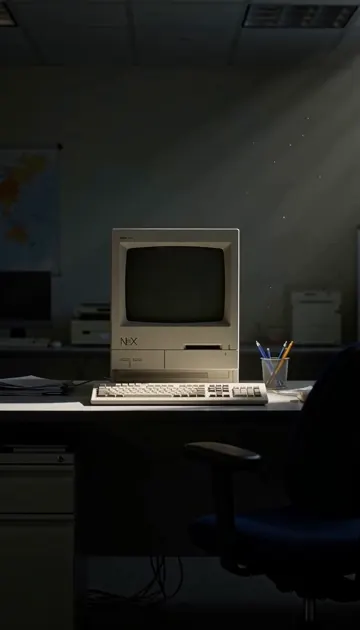
The first website is still online

Tim Berners-Lee published info.cern.ch in 1991 from a NeXT computer at CERN. It explained what the World Wide Web was — and the page is still reachable today.

Firsts

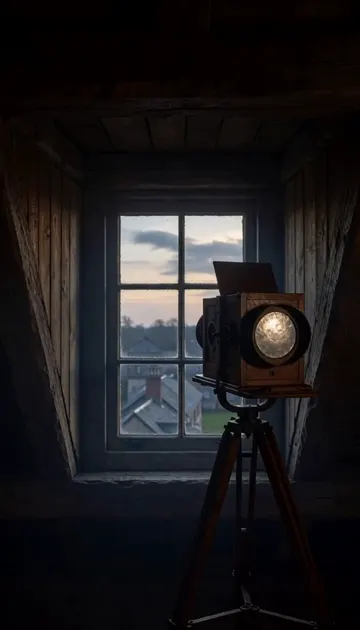
The first photograph took hours to shoot

Nicéphore Niépce made the oldest surviving photograph around 1826 in France. The pewter plate needed an exposure of many hours, so the sun lit both sides of the courtyard.
Firsts

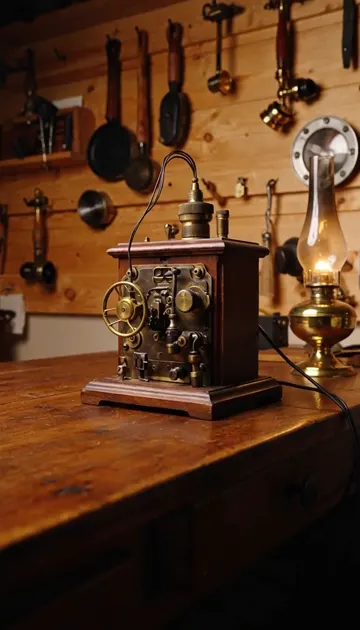
The first phone call was a request for help

In March 1876 Alexander Graham Bell spoke the first words down a telephone to his assistant in the next room: "Mr. Watson, come here, I want to see you."

Firsts

The first powered flight lasted 12 seconds

On 17 December 1903 at Kitty Hawk, the Wright Flyer stayed airborne for 12 seconds and covered about 36 metres — shorter than the wingspan of a modern airliner.

Firsts

The first human in space orbited in 108 minutes

Yuri Gagarin launched on 12 April 1961 and circled the whole planet in 108 minutes. He ejected and parachuted down separately from his capsule.

Firsts

The first Moon footprints may last millions of years

Neil Armstrong stepped onto the Moon on 20 July 1969. With no wind or rain, those bootprints in the dry lunar dust can survive for millions of years.

Firsts

The first email travelled about one metre

In 1971 Ray Tomlinson sent the first network email between two machines sitting side by side. He picked the @ symbol to separate user from host.

Firsts

The first text message said "Merry Christmas"

On 3 December 1992 engineer Neil Papworth sent the first SMS from a computer to a phone on the Vodafone network. Phones could not send texts back yet.

Firsts

The first YouTube video was 19 seconds at a zoo

"Me at the zoo" was uploaded in April 2005 by co-founder Jawed Karim. It is a shaky clip about elephants having "really, really, really long trunks".

Firsts

The first smartphone shipped in 1994

IBM Simon combined a phone, pager, calendar, notepad and email on a touchscreen you tapped with a stylus. Its battery lasted about an hour of talk time.

Firsts

The first computer programmer worked in the 1840s

Ada Lovelace wrote an algorithm for Charles Babbage's unbuilt Analytical Engine in 1843, and predicted machines could one day compose music.

Firsts

The first skyscraper was only ten storeys

Chicago's Home Insurance Building of 1885 stood about 42 metres tall, but its steel frame — not its walls — carried the load. That idea made every tower since possible.

Firsts

The first modern Olympics had no women

Athens 1896 gathered around 240 athletes from 14 nations, all of them men. Women first competed at the Paris games four years later.

Firsts

The first vaccine came from cowpox

In 1796 Edward Jenner used cowpox to protect against smallpox. The Latin for cow, vacca, is why we call it vaccination at all.

Firsts

The first heart transplant patient lived 18 days

Christiaan Barnard performed the first human heart transplant in Cape Town in December 1967. The surgery worked; pneumonia, worsened by anti-rejection drugs, did not.

Firsts

The first animal to orbit Earth was a stray dog

Laika launched aboard Sputnik 2 in November 1957. The Moscow street dog proved a living body could survive launch and weightlessness.

Firsts

Europe's first printed book took years to print

Gutenberg's Bible, finished around 1455, used movable metal type. Roughly 180 copies were printed and about 49 still survive today.

Firsts

The first national park was created in 1872

Yellowstone was set aside as a public park before Wyoming was even a state. It sits on top of one of the planet's largest volcanic systems.

Firsts

The first car had three wheels

Karl Benz patented the Motorwagen in 1886. Its single-cylinder engine made under one horsepower, and it steered on a single front wheel.

Firsts

The first underground railway ran on steam

London's Metropolitan Railway opened in 1863 with steam locomotives in brick tunnels. Passengers travelled through smoke thick enough that ventilation shafts were cut into the streets.

Firsts

The first Everest summit came in 1953

Edmund Hillary and Tenzing Norgay reached the top on 29 May 1953. They stayed about 15 minutes — the air up there holds a third of the oxygen at sea level.

Firsts

The first dive to the deepest sea took 5 hours

In 1960 the bathyscaphe Trieste carried two men nearly 11 km down into the Mariana Trench. The descent took about five hours; they stayed only 20 minutes.