Reels tagged #countries
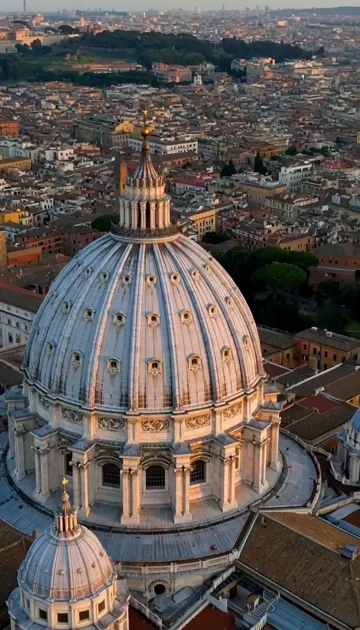
The smallest country fits inside a city
Vatican City covers just 0.49 km² — small enough to walk across in about 20 minutes.

Japan has a vending machine for every 30 people
With roughly four million machines nationwide, Japan has the highest density on earth. They sell hot coffee, ramen, umbrellas and even fresh eggs, and are trusted to run unattended all night.

Italy has more than 350 pasta shapes
Each shape is designed for a specific sauce: ridged tubes grab thick ragu, thin strands suit oil, and shells hold chunky vegetables. Names and shapes change from region to region.
India has the world's largest postal network
More than 150,000 post offices serve the country, including a floating post office on Dal Lake in Srinagar and one of the world's highest at Hikkim in Himachal Pradesh.
Brazil holds 60 percent of the Amazon rainforest
The forest produces a huge share of the planet's biodiversity and pumps moisture inland through flying rivers, airborne water flows larger than the Amazon river itself.
Almost all Egyptians live along the Nile
About 95 percent of Egypt's population lives on roughly 5 percent of its land, a green ribbon beside the river surrounded by desert, clearly visible from space at night.
Switzerland has bunker space for everyone
Swiss law required fallout shelters in new buildings for decades, leaving the country with more shelter places than people. Many are now used as wine cellars, hostels and data centres.
Iceland runs almost entirely on renewable power
Nearly 100 percent of its electricity comes from hydro and geothermal sources. Volcanic heat also warms homes, melts snow on pavements and heats outdoor pools all winter.
The Netherlands has more bikes than people
Around 23 million bicycles serve 18 million residents. Dedicated cycle lanes, bike parking garages and traffic lights for cyclists make riding faster than driving in many cities.
Australia built a fence longer than the Great Wall
The Dingo Fence stretches about 5,600 kilometres across the southeast to keep dingoes away from sheep country, making it one of the longest structures on earth.
Canada holds more lake area than the rest of the world combined
With over two million lakes covering nearly 9 percent of its territory, Canada contains an enormous share of the planet's fresh surface water.
Norway's coastline is longer than the equator
Counting fjords and islands, the coast runs over 100,000 kilometres. Glaciers carved the fjords, some over 1,300 metres deep with cliffs rising straight from the water.
Mexico gave the world chocolate and chilli
Cacao was first cultivated in Mesoamerica and drunk bitter and spiced. Mexico also domesticated chillies, maize, tomatoes, vanilla and avocado, reshaping cuisines everywhere.
France runs the world's most visited museum
The Louvre attracts millions each year to a former royal palace holding some 35,000 works on display, including the Mona Lisa behind bulletproof glass.
China built the world's largest high-speed rail network
More than 45,000 kilometres of high-speed track link its cities, with trains cruising at 350 km/h, longer than every other country's high-speed network put together.
Kenya's runners come mostly from one region
A large share of the country's distance champions grow up in the Rift Valley highlands around Iten, training at 2,400 metres where thin air builds extraordinary endurance.
Peru grows more than 3,000 kinds of potato
The Andes are the potato's homeland, and farmers still cultivate thousands of native varieties in purple, red, yellow and blue, many suited to specific altitudes.
Thailand was never colonised by Europe
Skilled diplomacy between British and French empires kept Siam independent while neighbours fell. Its name means land of the free.
Spain sits in the wrong time zone
Spain aligns with central European time even though it lies at the longitude of Britain. That mismatch pushes sunset late and helps explain dinners at 10pm.
South Korea pioneered the fastest internet
Aggressive fibre rollout gave the country years of world-leading average speeds and a gaming culture strong enough to make esports a televised national sport.
Istanbul sits on two continents at once
The Bosphorus strait splits the city between Europe and Asia, and commuters cross between continents twice a day by ferry, bridge and an undersea rail tunnel.
Greece has around 6,000 islands
Only about 227 are inhabited. The scattered geography shaped independent city-states in antiquity and gives Greece one of Europe's longest coastlines today.
Fez has a tannery running since medieval times
The Chouara tannery in Morocco still dyes leather in stone vats using methods largely unchanged for around a thousand years, with pigeon droppings and lime softening the hides.
The Trans-Siberian crosses eight time zones
Running 9,289 kilometres from Moscow to Vladivostok, the world's longest railway takes about a week and passes Lake Baikal, the deepest lake on earth.
New Zealand has about five sheep per person
Once over 20 sheep per person, the ratio has fallen but still leaves roughly 25 million sheep to five million people across steep green pasture.
Tango was born in Buenos Aires backstreets
It grew in the immigrant port neighbourhoods of the late 1800s, mixing African rhythms, European melody and local milonga, before Paris made it fashionable worldwide.
Vietnam is the world's robusta coffee giant
French colonists brought coffee in the 1800s, and Vietnam now supplies a huge share of global robusta. Local style brews it strong through a phin filter over condensed milk.
South Africa has three capital cities
Pretoria is the executive capital, Cape Town the legislative and Bloemfontein the judicial, a compromise created when the union formed in 1910.
Finland has more saunas than cars
Around three million saunas serve 5.5 million people, found in homes, offices, and even parliament. UNESCO recognised Finnish sauna culture as intangible heritage in 2020.
Indonesia is made of over 17,000 islands
Spread across three time zones, it is the world's largest archipelago and sits on the Ring of Fire with about 130 active volcanoes, more than any other country.
Ethiopia runs on its own calendar and clock
The Ethiopian calendar has 13 months and lags the Gregorian by about seven years. The day is counted from dawn, so 7am local sunrise is called one o'clock.