Reels tagged #geography
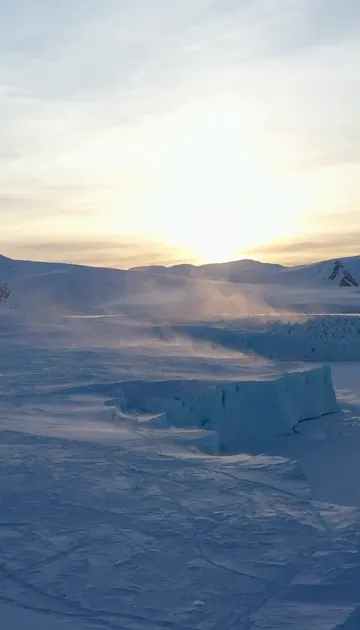
Antarctica is the largest desert on Earth
A desert is defined by rainfall, not heat. Antarctica gets so little precipitation that it beats the Sahara for the title.
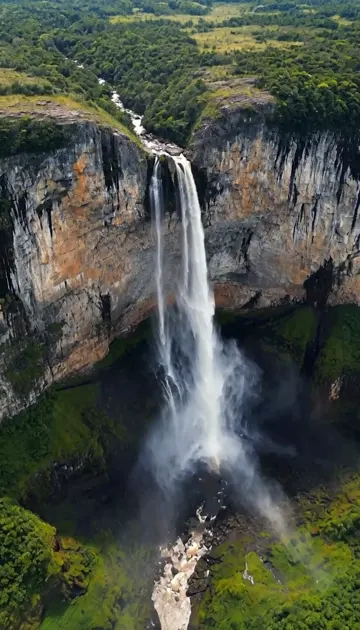
Angel Falls is so tall the water never lands
Venezuela's Angel Falls drops 979 metres — so far that much of the water turns to mist before it reaches the bottom, especially in the dry season.
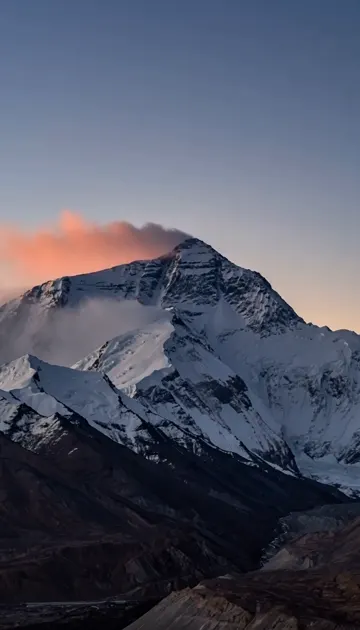
Mount Everest grows a few millimetres every year
The Indian plate keeps pushing into Asia, lifting the Himalayas roughly 4 mm a year — faster than erosion can wear them down.
The Dead Sea shore is the lowest land on Earth
At about 430 metres below sea level, its shoreline is the lowest exposed land anywhere — and it keeps dropping as the lake shrinks.
One lake holds a fifth of Earth's fresh surface water
Siberia's Lake Baikal is over 1,600 m deep and contains about 20% of all unfrozen freshwater on the planet.
Everest would still be underwater in the Mariana Trench
The Challenger Deep reaches nearly 11 km down — over 2 km deeper than Everest is tall.
Iceland is being torn in two
The island straddles the Mid-Atlantic Ridge, so North America and Eurasia pull apart beneath it by about 2 cm every year.
Canada has more lakes than the rest of the world combined
With roughly 62% of the planet's lakes inside its borders, Canada holds more standing fresh water than any other country.
Greenland is not as big as your map says
The Mercator projection stretches areas near the poles — Greenland looks Africa-sized but Africa is about 14 times larger.
Chile is longer than the United States is wide
Chile stretches about 4,300 km north to south while averaging only around 180 km across.
The smallest country fits inside a city
Vatican City covers just 0.49 km² — small enough to walk across in about 20 minutes.
Some Atacama weather stations have never recorded rain
Parts of Chile's Atacama are the driest non-polar place on Earth, with soils so dry they are used to test Mars rovers.
Most volcanoes sit on one giant ring
About 75% of the world's active volcanoes and 90% of earthquakes happen along the Pacific Ring of Fire.
The largest living structure is visible from orbit
The Great Barrier Reef spans over 2,300 km and is built by billions of tiny coral polyps.
Everest is not the point closest to space
Because Earth bulges at the equator, Ecuador's Chimborazo summit sits about 2 km farther from the planet's centre than Everest.
The world's biggest mirror is a salt flat
When a thin layer of water covers Bolivia's Salar de Uyuni, its 10,000 km² of salt reflects the sky almost perfectly.
Norway's coastline is longer than the equator
Counting every fjord and island, Norway's shoreline runs over 100,000 km — more than twice around the Earth.
The Amazon makes its own rain
The rainforest releases around 20 billion tonnes of water vapour a day, forming "flying rivers" that water much of South America.
One city sits on two continents
Istanbul is split by the Bosphorus, with neighbourhoods in both Europe and Asia connected by bridges and a tunnel.
The loneliest place on Earth is water
At Point Nemo in the South Pacific, the nearest land is 2,688 km away — astronauts overhead are often the closest humans.
The Nile turns desert into a green ribbon
Almost all of Egypt's population lives on the few percent of land watered by the Nile, visible from space as a green line through sand.