Reels tagged #biology

KnowledgeReels
Swipe up
Human Body

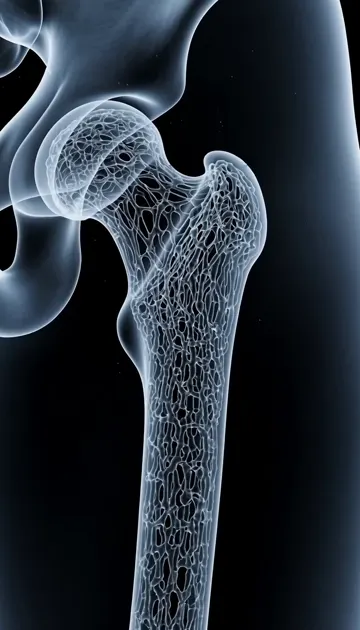
Bone is stronger than steel by weight

Gram for gram, human bone outperforms steel in compression — a hollow lattice design gives it strength without the weight.
Human Body

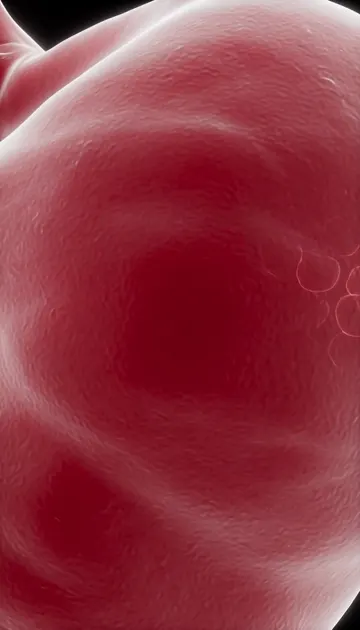
Your stomach rebuilds its own lining every few days

Stomach acid is strong enough to dissolve metal, so the lining replaces its cells every 3–4 days to avoid digesting itself.
Animals

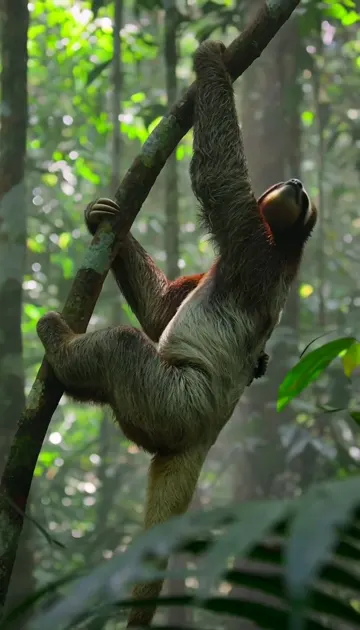
Sloths take a month to digest one meal

A sloth's stomach has multiple chambers and works so slowly that a single leaf meal can take up to 30 days to digest. Their whole metabolism runs at about half the rate expected for their body size.

Animals

A hummingbird's heart beats 1,200 times a minute

In flight a hummingbird's heart can hit around 1,200 beats per minute and its wings blur at 50-80 beats per second. To survive the night they drop into torpor, slowing everything to a near hibernation.

Animals

Axolotls can regrow parts of their brain

Axolotls regenerate limbs, tails, spinal cord, heart tissue and even portions of their brain without scarring. They also stay in their larval form for life, keeping their feathery gills forever.

Animals

Flamingos are born grey

Their pink comes entirely from carotenoid pigments in the algae and brine shrimp they eat. A flamingo on the wrong diet slowly fades back to pale white.

Animals

A giraffe has the same number of neck bones as you

Seven vertebrae, just enormously elongated. Its heart weighs around 11 kg to push blood two metres up to the brain, and special valves stop a head rush when it bends to drink.

Animals

One jellyfish can reverse its own ageing

Turritopsis dohrnii can revert from adult medusa back to its juvenile polyp stage when stressed, restarting its life cycle, in principle indefinitely.

Animals

Hippos sweat their own sunscreen

Hippos secrete a reddish oily fluid often called blood sweat. It absorbs ultraviolet light and acts as an antibiotic, protecting their hairless skin.

Animals

Bats are the only mammals that truly fly

Their wings are elongated hand bones webbed with skin, and most species map the dark with echolocation calls loud enough to damage human hearing if we could hear them.

Animals

Owls cannot move their eyes

Owl eyes are tubes fixed in the skull, so they rotate their heads up to 270 degrees instead. Extra neck vertebrae and blood reservoirs keep the brain supplied through the twist.

Animals

Starfish have no brain and no blood

A sea star runs on a nerve ring instead of a brain and pumps filtered seawater through its body in place of blood. Many can regrow an entire body from one arm.

Human body

Your brain burns a fifth of your energy

It is about 2% of your body weight but consumes roughly 20% of your calories and oxygen — running on around 20 watts, less than a dim light bulb.

Human body

You carry about 86 billion neurons

Each one can connect to thousands of others, making roughly 100 trillion synapses — a wiring diagram no machine has yet come close to matching.

Biology

Your cells carry a second, separate genome

Mitochondria have their own small circular DNA, inherited only from your mother. They are thought to descend from ancient bacteria absorbed by our ancestors' cells.

Biology

One cell holds about two metres of DNA

Packed into a nucleus a few micrometres wide, your DNA is wound and coiled with astonishing efficiency. Stretched end to end, the DNA in your whole body would reach far beyond the Sun.

Biology

You carry roughly as many bacterial cells as human ones

Current estimates put the ratio near one to one — tens of trillions of microbes, mostly in your gut, helping digest food and train your immune system.

Biology

A red blood cell lives about 120 days

It has no nucleus, so it cannot repair itself. In that short life it makes roughly 170,000 trips around your body before being recycled in the spleen.

Biology

Your outer skin is completely replaced every month

The epidermis renews itself continuously, and humans shed on the order of tens of thousands of skin cells every minute. Much of household dust is you.

Biology

Most of the oxygen you breathe came from the ocean

Marine phytoplankton — microscopic drifting algae — produce roughly half of Earth's oxygen, rivalling every forest on land combined.

Biology

Forests trade nutrients through fungal networks

Underground mycelium links tree roots into vast webs that move sugars, water and warning signals between plants — often called the wood wide web.

Biology

Your heart beats over 2.5 billion times in a lifetime

Around 100,000 beats a day, pumping some 7,000 litres of blood, without a single voluntary command from you.

Biology

Gene editing was borrowed from bacteria

CRISPR is a bacterial immune system: microbes store snippets of viral DNA and use them to recognise and cut invaders. Scientists turned that defence into a precision editing tool.

Biology

Tree rings are a climate archive

Each ring records one growing season — wide in good years, narrow in droughts. Overlapping rings from living and ancient wood reconstruct climate back thousands of years.

Inventions

A cloth merchant discovered the microbial world

Antonie van Leeuwenhoek ground his own tiny lenses to inspect fabric, then pointed them at pond water in the 1670s and became the first human to see bacteria, which he called animalcules.