Reels tagged #animals

KnowledgeReels
Swipe up
Animals

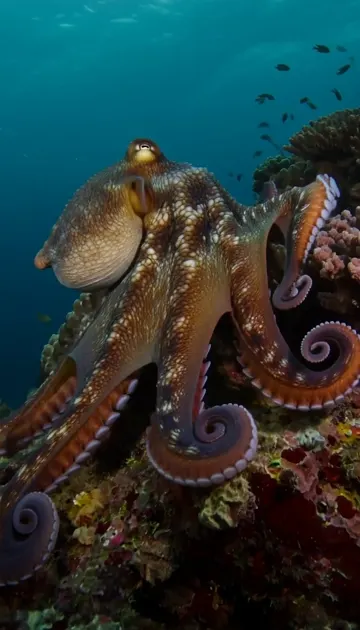
Octopuses have three hearts and blue blood

Two hearts pump blood through the gills and one through the body. Copper-based hemocyanin carries their oxygen and turns the blood blue.

Animals

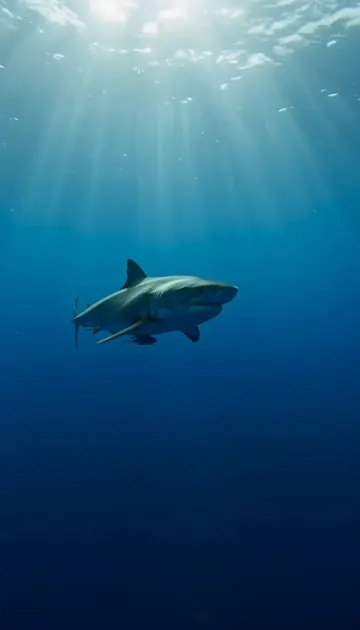
Sharks are older than trees

Sharks have patrolled the oceans for about 450 million years. The first trees appeared roughly 100 million years later — sharks predate Saturn's rings too.

Animals

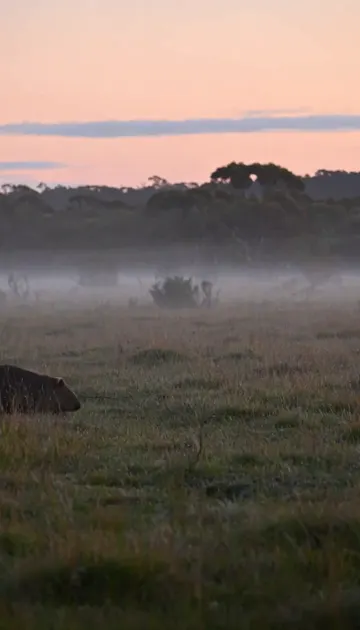
Wombats produce cube-shaped droppings

Their intestines have stretchy and stiff sections that mould waste into cubes — so it stays put on rocks and logs when marking territory.

Animals

Tardigrades can survive the vacuum of space

These half-millimetre "water bears" dry into a tun state and shrug off radiation, boiling heat and near absolute zero — and have been revived after a space trip.

Animals

A blue whale's heart is the size of a small car

It weighs around 180 kg and beats as slowly as twice a minute during deep dives — audible from three kilometres away.

Animals

Sloths take a month to digest one meal

A sloth's stomach has multiple chambers and works so slowly that a single leaf meal can take up to 30 days to digest. Their whole metabolism runs at about half the rate expected for their body size.

Animals

A hummingbird's heart beats 1,200 times a minute

In flight a hummingbird's heart can hit around 1,200 beats per minute and its wings blur at 50-80 beats per second. To survive the night they drop into torpor, slowing everything to a near hibernation.

Animals

Axolotls can regrow parts of their brain

Axolotls regenerate limbs, tails, spinal cord, heart tissue and even portions of their brain without scarring. They also stay in their larval form for life, keeping their feathery gills forever.

Animals

A mantis shrimp punches fast enough to boil water

Its club accelerates like a bullet, and the collapsing bubble left behind briefly reaches thousands of degrees, flashing light. The punch lands even if the strike misses.

Animals

Elephants talk through the ground

Elephants produce infrasonic rumbles below human hearing that travel several kilometres through air and soil. They pick up the vibrations through their feet and trunk bones.

Animals

A cheetah out-accelerates most supercars

A cheetah goes from standstill to 100 km/h in about three seconds, with its spine flexing like a spring and only two of its four feet touching ground for most of a stride.

Animals

A narwhal's tusk is actually a tooth

The spiral tusk is an overgrown left canine that erupts through the lip and can reach three metres. It is packed with millions of nerve endings, making it a giant sensory organ.

Animals

Emperor penguins dive deeper than submarines go casually

Emperor penguins reach depths beyond 500 metres and hold their breath for over 20 minutes, collapsing their lungs and rerouting blood to essential organs.

Animals

Crows make tools and hold grudges

New Caledonian crows bend wire into hooks to fish grubs out of logs, and crows can remember a human face that threatened them for years, teaching that face to their flock.

Animals

Koala fingerprints fool forensic scanners

Koalas evolved looping ridged fingerprints almost indistinguishable from human ones under a microscope, likely for gripping eucalyptus branches and leaves.

Animals

Flamingos are born grey

Their pink comes entirely from carotenoid pigments in the algae and brine shrimp they eat. A flamingo on the wrong diet slowly fades back to pale white.

Animals

A giraffe has the same number of neck bones as you

Seven vertebrae, just enormously elongated. Its heart weighs around 11 kg to push blood two metres up to the brain, and special valves stop a head rush when it bends to drink.

Animals

One bird flies to the Moon and back three times

The Arctic tern migrates pole to pole every year, roughly 70,000 km, and over a 30-year life covers a distance comparable to three round trips to the Moon.

Animals

Platypuses hunt with their eyes shut

Underwater a platypus closes its eyes, ears and nostrils and navigates purely by electroreception, sensing the faint electrical fields of shrimp and worms with its bill.

Animals

One jellyfish can reverse its own ageing

Turritopsis dohrnii can revert from adult medusa back to its juvenile polyp stage when stressed, restarting its life cycle, in principle indefinitely.

Animals

Hippos sweat their own sunscreen

Hippos secrete a reddish oily fluid often called blood sweat. It absorbs ultraviolet light and acts as an antibiotic, protecting their hairless skin.

Animals

Bats are the only mammals that truly fly

Their wings are elongated hand bones webbed with skin, and most species map the dark with echolocation calls loud enough to damage human hearing if we could hear them.

Animals

Dolphins sleep with half their brain awake

One hemisphere rests while the other keeps the dolphin surfacing to breathe and watching for danger, with one eye open. They never fully lose consciousness.

Animals

In seahorses, the male gets pregnant

The female deposits eggs into the male's brood pouch, where he fertilises them, supplies oxygen and nutrients, and then gives birth to hundreds of tiny seahorses.

Animals

Leafcutter ants invented farming first

They do not eat the leaves they carry. They feed them to an underground fungus they have cultivated for tens of millions of years, weeding it and dosing it with antibiotic bacteria.

Animals

Owls cannot move their eyes

Owl eyes are tubes fixed in the skull, so they rotate their heads up to 270 degrees instead. Extra neck vertebrae and blood reservoirs keep the brain supplied through the twist.

Animals

Starfish have no brain and no blood

A sea star runs on a nerve ring instead of a brain and pumps filtered seawater through its body in place of blood. Many can regrow an entire body from one arm.

Animals

Bees give directions by dancing

A returning forager performs a waggle dance whose angle encodes the direction to food relative to the Sun and whose duration encodes the distance.

Animals

Wolf howls carry for 10 kilometres

In open terrain a howl can travel about 10 km, and packs use different pitches so a chorus of a few wolves sounds like many, exaggerating pack size to rivals.

Animals

Chameleons change colour with crystals, not pigment

They tune a lattice of nanocrystals in their skin, changing the spacing to reflect different wavelengths. Colour shifts signal mood and temperature more than camouflage.

Chernobyl

The exclusion zone became a wildlife sanctuary

With humans gone, the 2,600 km² zone filled with wolves, lynx, bison and wild horses. Radiation still lingers, but for most species the absence of people has been the bigger factor.

Firsts

The first animal to orbit Earth was a stray dog

Laika launched aboard Sputnik 2 in November 1957. The Moscow street dog proved a living body could survive launch and weightlessness.

Zoology

A shrimp can shoot a bubble hotter than lava

The pistol shrimp snaps its claw so fast it creates a collapsing cavitation bubble, producing a shockwave, a flash of light and a crack loud enough to stun prey.

Zoology

Kangaroos essentially cannot walk backwards

Their thick tail and huge hind feet make reversing impractical — one reason the kangaroo appears on Australia's coat of arms as a symbol of moving forward.

Zoology

Cows have best friends

Studies show cows pair up with preferred companions, and their heart rate and stress hormones rise when separated from that particular friend.

Zoology

Sea otters hold hands while they sleep

Floating in rafts, otters grip each other — or wrap themselves in kelp — so the current does not carry them apart during the night.

Zoology

A snow leopard's tail is almost as long as its body

It works as a counterweight for leaps across cliffs, and wraps around the animal like a scarf against Himalayan cold.

Zoology

The pangolin is the only mammal covered in scales

Its armour is keratin — the same material as your fingernails — and it rolls into a ball so tight that even lions usually give up.

Zoology

An electric eel can discharge around 600 volts

It is not a true eel but a knifefish, and it uses weak pulses to navigate and strong bursts to stun prey in murky Amazon water.

Zoology

Camel humps store fat, not water

The fat is fuel and insulation. Camels survive deserts through tough blood cells, tolerance of body-heat swings and drinking over 100 litres in minutes.

Zoology

A praying mantis can turn its head 180 degrees

It is one of the few insects that can look over its shoulder, and it has a single ear on the underside of its body tuned to bat calls.