Reels tagged #7wonders

KnowledgeReels
Swipe up
7 Wonders

Only one ancient wonder is still standing

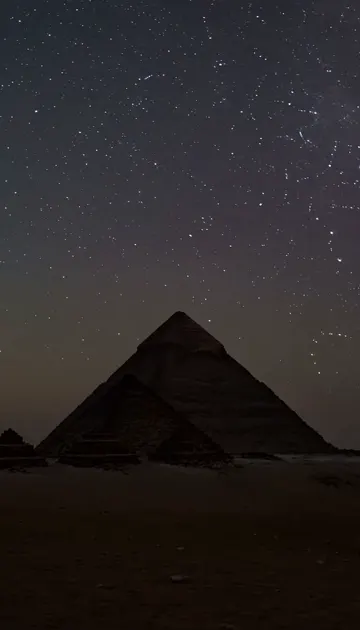
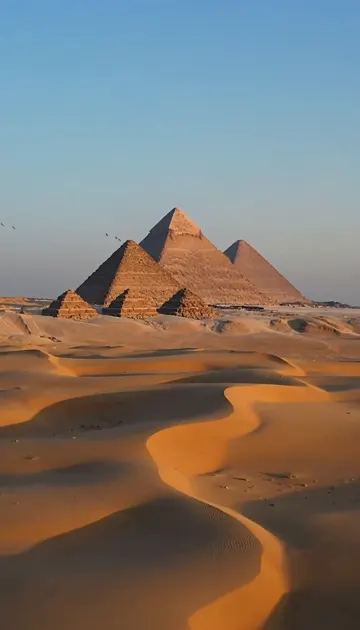
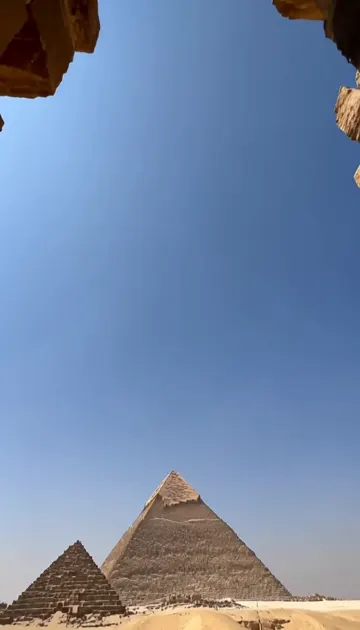
The Great Pyramid of Giza is the sole survivor of the seven wonders of the ancient world. It was already more than 2,000 years old when the original list was compiled.

7 Wonders

The Great Pyramid held a record for 3,800 years

At 146 metres, it was the tallest human-made structure on earth from about 2560 BC until Lincoln Cathedral's spire was completed around 1311 AD.

7 Wonders

The pyramid is aligned almost perfectly to north

Its sides face the cardinal directions to within a fraction of a degree, an accuracy achieved without compasses, most likely by tracking stars circling the celestial pole.
7 Wonders

Nobody has ever found the Hanging Gardens

Ancient writers described terraced gardens watered by machinery in Babylon, yet no Babylonian text or ruin confirms them. Some scholars argue the gardens were actually in Nineveh.

7 Wonders

Watering the gardens needed serious engineering

Lifting river water up terraces in a desert climate would have required chain pumps or an Archimedes-style screw, technology described centuries before Archimedes was born.

7 Wonders

The statue of Zeus was 12 metres of gold and ivory

Made by Phidias around 435 BC at Olympia, the seated Zeus nearly touched the temple ceiling. Visitors joked that if he stood, he would take the roof off.

7 Wonders

The Zeus statue vanished without a trace

After the Olympic Games were banned, the statue was likely moved to Constantinople and destroyed in a fire around 475 AD. Only coins and descriptions record what it looked like.

7 Wonders

The Temple of Artemis was rebuilt three times

The great marble temple at Ephesus was flooded, burned down by an arsonist in 356 BC and rebuilt grander each time. Today a single reassembled column marks the site.

7 Wonders

A man burned a wonder just to be remembered

In 356 BC Herostratus set fire to the Temple of Artemis seeking fame. Ephesus banned anyone from speaking his name, yet historians recorded it anyway and the ban failed.

7 Wonders

The word mausoleum comes from one man's tomb

The Mausoleum at Halicarnassus was built for Mausolus, a Persian satrap, around 350 BC. It was so admired that his name became the general term for any grand tomb.

7 Wonders

Earthquakes toppled the Mausoleum over centuries

A series of quakes between the 12th and 15th centuries wrecked the tomb, and crusaders reused its polished stone to fortify Bodrum Castle, where the blocks are still visible.

7 Wonders

The Colossus of Rhodes stood for only 54 years

The 33-metre bronze sun god was finished around 280 BC and collapsed in an earthquake in 226 BC. Its bronze pieces lay on the ground for centuries and still drew tourists.

7 Wonders

The Colossus never straddled the harbour

Medieval art shows ships sailing between its legs, but the statue could not have stood that way without collapsing. It most likely stood on one side of the Rhodes harbour entrance.

7 Wonders

The Lighthouse of Alexandria guided ships for 1,600 years

Built around 280 BC on Pharos island, it rose over 100 metres and used a mirror to project firelight far out to sea. Its name became the word for lighthouse in several languages.

7 Wonders

Divers found the lighthouse on the seabed

Earthquakes toppled the Pharos by 1323. In the 1990s archaeologists located huge blocks and statues from it underwater in Alexandria's harbour, where dives still recover fragments.

7 Wonders

The new seven wonders were chosen by public vote

In 2007 a global poll with more than 100 million votes picked seven modern wonders: the Great Wall, Petra, Christ the Redeemer, Machu Picchu, Chichen Itza, the Colosseum and the Taj Mahal.

7 Wonders

The Great Wall is more than 21,000 kilometres long

A 2012 survey counted all branches and eras of construction at 21,196 km. It is not one continuous wall but many walls built by different dynasties over 2,000 years.

7 Wonders

You cannot see the Great Wall from space

Despite the popular claim, astronauts report the wall is too narrow and blends with surrounding terrain. Chinese astronaut Yang Liwei confirmed he could not spot it from orbit.

7 Wonders

Petra survived on brilliant water engineering

The Nabataeans carved a city into desert sandstone and kept it alive with dams, cisterns and ceramic pipes that captured flash floods and delivered steady drinking water.

7 Wonders

Petra was unknown to the West until 1812

Local Bedouin always knew the city, but Europeans learned of it when Swiss explorer Johann Ludwig Burckhardt disguised himself as a pilgrim to reach the hidden valley.

7 Wonders

Christ the Redeemer is struck by lightning yearly

The 30-metre statue above Rio sits on a peak hit by lightning several times a year. Repairs keep spare soapstone from the original quarry to patch damaged fingers and head.

7 Wonders

Machu Picchu was built on earthquake-proof foundations

Beneath the visible terraces lie deep layers of crushed stone that drain heavy rain and absorb seismic shocks, which is why the site still stands in an active earthquake zone.

7 Wonders

A Maya pyramid is a calendar in stone

El Castillo at Chichen Itza has 91 steps on each of four sides plus the top platform, totalling 365, and at the equinoxes shadows form a serpent slithering down the staircase.

7 Wonders

Clap at Chichen Itza and a bird answers

A handclap at the base of El Castillo returns a chirping echo that closely matches the call of the quetzal, a sacred Maya bird. Acousticians say the staircase geometry creates it.

7 Wonders

The Colosseum could empty in minutes

Eighty numbered entrance arches and a system of stairways let up to 50,000 spectators leave quickly, a crowd-flow design modern stadiums still study.

7 Wonders

Romans may have flooded the Colosseum for sea battles

Ancient writers describe naumachiae, mock naval battles staged in the flooded arena before the underground hypogeum was built beneath the floor.

7 Wonders

The Taj Mahal changes colour through the day

Its white marble looks pink at dawn, brilliant white at noon and golden under moonlight, an effect of translucent Makrana marble reflecting the changing sky.

7 Wonders

The Taj Mahal's minarets lean outward on purpose

Each of the four towers tilts slightly away from the tomb so that in an earthquake they would fall outward instead of collapsing onto the central dome.

7 Wonders

The ancient list was a tourist guide

Greek writers compiled the seven wonders as sights worth seeing around the Mediterranean, all within reach of a traveller from the Hellenistic world. Places beyond it were never considered.

7 Wonders

A mirror on the Pharos could be seen 50 km away

Accounts say a polished bronze mirror at the lighthouse's summit reflected sunlight by day and firelight by night, visible far out to sea by approaching ships.